GERMAN CHAMOMILE: THE INDIGO ANTIDOTE
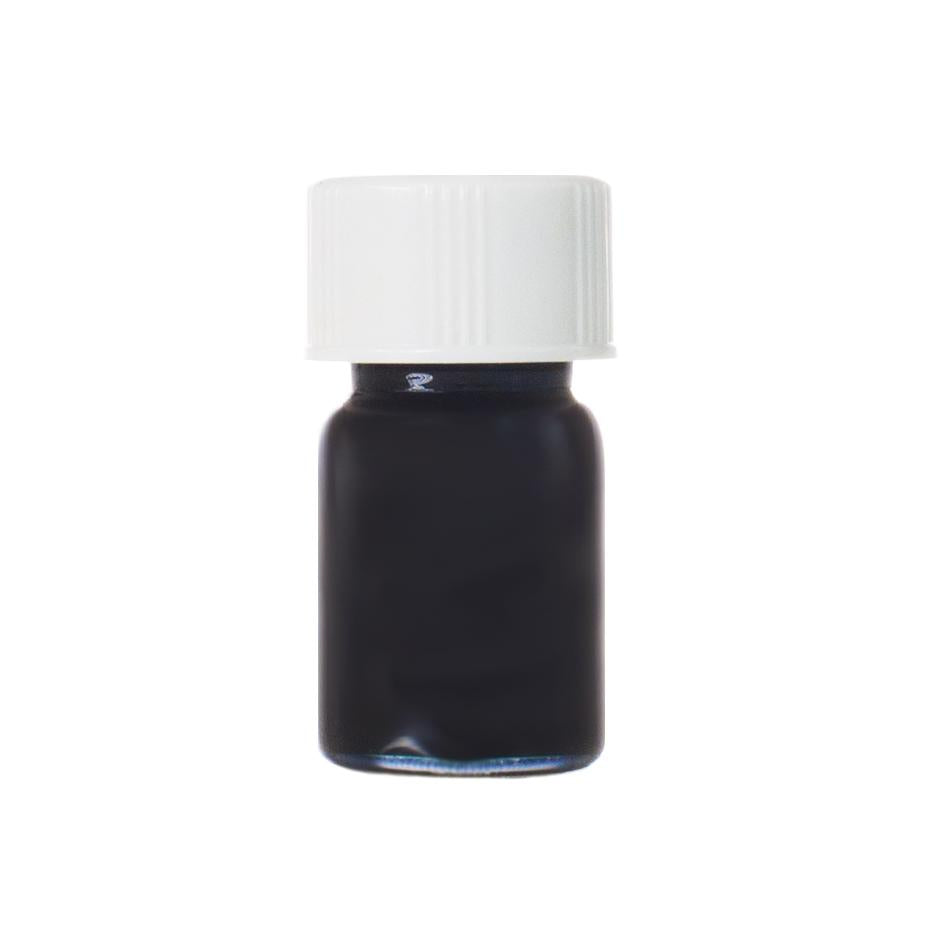
Inky-blue drops of German Chamomile Essential Oil envelop the soul and skin with cool comfort. Its cobalt blue hue gives us a clue that German Chamomile is an exceptional essence for its replenishing, calm, cool caress for skin in stress. In the generational apothecaries of healers and midwives, the botanical name Matricaria, from the Latin matrix (womb) and mater (mother), honors its heirloom legacy as a "mothering" birth tonic and universal protector.
Early morning petal plucking results in the best distillations, as the delicate flowers are fullest with matricin at dawn. Matricin is a colorless precursor molecule (a proazulene) found in the flower's glandular hairs. During the steam distillation process, this matricin undergoes a thermal metamorphosis to become chamazulene, the star molecule that imparts this oil with its marine blue hue and compelling cooling properties. While both Roman and German Chamomile are champions for skincare, they are distinct in color and spiritus: the ethereal liquid of Roman Chamomile is sunshine on a summer day with comforting notes of honeyed hay, whereas German Chamomile’s ink-blue drops offer an "antidote to red" that keeps the skin and spirit calm and clear with its nexus-nectar.
"German chamomile oil is a deep blue, somewhat viscous liquid... The odor is very sweet, herbaceous-tobacco-like, slightly fruity, and very tenacious."
Steffen Arctander, Perfume and Flavor Materials of Natural Origin
"An authentic essential oil of the alpha-bisabolol type, makes it one of the most valuable essential oils. It is completely nontoxic and nonirritating and serves as a welcome universally applicable agent. Addition of German Chamomile essential oil to face and body oils always works."
Kurt Schnaubelt, The Intelligence of Essential Oils
GERMAN CHAMOMILE APPLICATIONS
Applied topically, the chamazulene is a Chamomile-coolant for hot, dry skin issues, clearing the appearance of red skin and brightening skin texture. It is a user-friendly essence that may be applied undiluted for targeted relief or added to massage oils to soothe the mind, muscles, and emotions. Enjoy in baths and anoint the pulse points or the bottom of the feet for sweet sleep. Inhale via a salt pipe, Nose Glow, or diffuser to clear the mind and emotions. Beyond the skin, it is used as a culinary oil and added to teas and honeys for its sweet, herbaceous charm.
BOTANICAL PROFILE
Botanical Name: Matricaria recutita (Matricaria chamomilla)
Botanical Family: Asteraceae
Extraction Method: Steam distilled
Part of Plant Distilled: Flowers
Country of Origin: Germany
Cultivation Method: Organic
Composition: 100% Matricaria recutita
Consistency: Thin to medium viscosity
Scent Description: Floral, herbaceous, and sweet with tobacco-like undertones.
In Living Libations: All Seeing Eye Crème, Open Sky Eye Serum.
Blends Beautifully: Lavender, Marjoram, Basil, Frankincense, Chamomile, Yarrow, Cardamom, Rose Otto, Peppermint, Palmarosa, Geranium, and Eucalyptus.
Key Constituents: The Indigo Blue Sesquiterpene Salvation
The phytochemical spiritus of German Chamomile reveals a sophisticated sesquiterpene substance designed for maximum restoration. This inky-blue essence is saturated by a substantial 45% concentration of trans-beta-farnesene, a molecule that defines its deep oceanic calm and compelling skin-smoothing properties. Working in tandem is the highly valued alpha-bisabolol (10%), a constituent Kurt Schnaubelt describes as making this one of the most valuable essential oils for universally applicable skin care.
The signature cobalt hue is a visual crown for the 4% chamazulene content, a thermal-metamorphosis byproduct of matricin that functions as a Chamomile-coolant. This profile is bolstered by a 4% presence of germacrene D and a 5% concentration of cis-spiroether, a rare polyyne that contributes to the oil's systemic serenity. The distillation is topped with rare bisabolol oxides (totaling 5%) that provide more skin replenishers, ensuring this "mothering" essence keeps both skin and spirit serene.
View or download the Certificate of Analysis.
This essential oil is verified, genuine distillation, third-party tested to ensure 100% purity.
THE CALMING CHAMOMILES: A PHYTOCHEMICAL SYMPHONY
These botanical cousins of the Asteraceae family share a floral family resemblance. Chamomile carpets in wild meadows all look beautifully alike, blanketing fields with dainty, mini-daisy-like white petals haloing bright golden centers, topped with the sweet, classic apple-aroma of Chamomile, from the Greek chamaimēlon, meaning "earth-apple." Yet, beneath their pearly petals lives a diverse internal alchemy. While all Chamomiles are cherished for their calming charisma and as skin-soothing elixirs, they embody distinct fragrant phytochemical footprints that guide their specialized enjoyment.
Chamomile (Anthemis nobilis)
Living Libations classic Roman Chamomile with its noble reputation as a restorative remedy and complexion calmer, is primarily defined by a high concentration of esters. It is abundant in 2-methylbutyl angelate (15%), methallyl angelate (10%), and 3-methylpentyl angelate (9%). This high-ester density makes it a graceful essence to soothe restlessness and tune into tranquility. These esters are valued for their skin-softening qualities and “serenity now” disposition. Its herbaceous-ambrosial aroma is welcoming, honeyed, and topped with a warming note reminiscent of "ripened apples on hay" that deepens into a smooth, tenacious, tea-like dry-down.
Wild Moroccan Chamomile (Ormenis multicaulis)
This wild Chamomile variety is the "botanical maverick" of the family, characterized by a more astringent and clarifying profile than the lullaby esters of the classic Anthemis nobilis variety. Phytochemically, it is anchored by a significant monoterpene footprint of alpha-pinene (16%), 1,8-cineole (9%), and santolina alcohol (8%). This variety is a salient skin savior particularly prized for balancing oily complexions and rejuvenating the appearance of scars. Its spiritus emanates a forest-like top note and a tenacious, herbaceous, slightly balsamic dry-down.
German Chamomile (Matricaria recutita)
This cobalt-colored Chamomile essential oil is the inky-blue "go-to" for addressing dermal distress. The botanical name Matricaria recutita means “mother’s plant that blooms again,” honoring this chamomile’s legacy as a comforting herbal helper for the birthing process. The oil's signature blue dew drops are saturated in a substantial 45% concentration of trans-beta-farnesene, a sesquiterpene that defines its deep oceanic calm. Working in tandem is the very special compound chamazulene. While it doesn’t exist in the fresh plant itself, this intense blue compound is miraculously born during the gentle steam distillation process. Chamazulene is a legendary antioxidant; its sapphire hue serves as the ultimate soothing antidote for anything red, hot, or irritated. Combined with alpha-bisabolol (10%), German Chamomile stands as a true-blue "dermal do-all." Its scent is deep and sweet, described as herbaceous-tobacco-like and slightly fruity, with a rich, comforting, hay-like sweetness.
Blue Tansy (Tanacetum annuum)
Often called "Moroccan Chamomile" and sometimes mislabeled as German Chamomile, this oil is a botanical treasure of phytochemical finesse. While it shares the indigo hue of the German variety, its quintessential calm is uniquely anchored by a significant concentration of sabinene (20%) and myrcene (5%). It also contains a robust chamazulene content averaging up to 11% depending on the harvest, though it is completely without the alpha-bisabolol found in German Chamomile. Containing a rare chamazulene and camphor combination at a hearty 12% provides the clarifying, camphorous, and herbaceous synergy that differs from true Chamomiles, making it an essential anchor in skincare formulations for hyper-reactive skin. The unique presence of camphor creates a beautifully camphorous, cooling blend that helps with histamine-like reactions, elegantly easing flare-ups, taking the heat out of puffiness, and quelling itchiness. Aromatically, it is a "superhero-skin-savior" that smells like a sun-warmed orchard of wild apples and honey, offering a fruity-floral sweetness rarely found in a single material.
Cape Chamomile (Eriocephalus punctulatus)
This fragrant, floral dream is a favorite, featuring a luminous aquamarine hue and a complex combination of esters and sesquiterpenes that act as "super-soothers". Cheery Cape Chamomile beautifully combines the skin-loving qualities of both Roman and German varieties, containing a delicate, subtle whisper of chamazulene at just 0.40%. This trace amount is precisely what creates its soft, magical azure tone. Each dewy drop bedews a sophisticated, ester-saturated profile uniquely anchored by two exceptional, rare calmative molecules: 2-methylbutyl isobutyrate at an abundant 28% and isobutyl isobutyrate at 14%. These ample aliphatic esters envelop the skin in a serene substance that revives the radiant spiritus of the complexion while giving the oil its laid-back vibes. Its scent easily surpasses its botanical cousins as a fine berry-floral fragrance that is highly sought after in luxury perfumery. Cape Chamomile is completely distinct for its invitingly fruity, honeyed, and light floral notes that are perfectly pleasant for everyone.
GERMAN CHAMOMILE: FREQUENTLY ASKED QUESTIONS
What is the difference between German and Roman Chamomile?
While both are of the Asteraceae family and exceptional skin elixirs, they are chemically distinct. Roman Chamomile is an "ester-excellerant" containing over 80% esters, a summer hay floral with a lovely languid sentiment. German Chamomile is a "sesquiterpene-stronghold" dominated by a substantial 45% concentration of trans-beta-farnesene and 10% alpha-bisabolol, making it an amazing option for calming eye care, clearing red skin, and chilling things down.
Why is German Chamomile blue?
The blue color is created during steam distillation. The heat transforms matricin, a colorless precursor found in the flower petals, into chamazulene, resulting in the oil's famous inky-cobalt hue.
Can I use German Chamomile for eyes?
Yes, in highly specialized formulations. It is a hero ingredient in All Seeing Eye Crème and Open Sky Eye Serum for its ability to soothe the delicate tissues around the eyes.
Is German Chamomile often adulterated?
Because of its high value and distinct color, German Chamomile (Matricaria recutita) is sometimes adulterated with Blue Tansy (Tanacetum annuum). While Blue Tansy is a beautiful essential oil in its own right, it has a different chemical profile and aromatic signature. Occasionally, oils are also "stretched" with synthetic chamazulene to mimic the deep indigo hue. To ensure you are receiving the Indigo Antidote in its purest form, always look for a distillation that is verified to be of the alpha-bisabolol type.